UNIVERSITY OF FLORIDA
CENTER FOR LANSCAPE CONSERVATION PLANNING
Bridging the gap between the built environment and the natural world
As an official research forum within UF’s College of Design, Construction and Planning, we conduct applied research at the intersection of conservation and land use. By uniting the disciplines of design, urban planning, and wildlife conservation, we create sustainable solutions for a changing landscape.
Four key programmatic areas to drive our mission and activities

CONSERVATION PLANNING
We provide science and policy guidance to help identify Florida’s most important conservation lands.

LAND PROTECTION
We advance land protection through partnerships across Florida’s working landscapes.

GREEN INFRASTRUCTURE DESIGN
We connect transportation, recreation, and ecology through green infrastructure planning and design.

EDUCATION AND OUTREACH
We advance conservation through education, outreach, and student mentorship.

UF Center for Landscape Conservation Planning Hub
Explore Florida’s conservation connectivity data through interactive maps, geospatial resources, and decision-support tools like the EcoCon.
BY THE NUMBERS
The 2025 numbers are in! We provided the science support needed for our partners at the Florida Conservation Group to work directly with ranchers and other private landowners to safeguard Florida’s environmental and agricultural heritage.
30,000+
Acres of private and ranch land successfully protected
8,500+
Acres advanced to the Florida Cabinet for final approval
21,000+
Acres submitted to state and federal conservation programs
43,000+
Acres prepared for submission to the Rural Family and Lands Protection Program
HIGHLIGHTS
Featured Publication
A Practitioner’s Guide to
Planning and Design of Wildlife Crossings in Florida
Roads are one of the greatest threats to wildlife: fragmenting habitats, causing roadkill, and isolating animal populations. This practical guide walks agencies, land managers, and conservationists through how to plan, design, implement, and monitor wildlife crossing structures to reduce these impacts. From identifying high-risk road segments to post-construction monitoring, it offers real-world, Florida focused guidance with universal application.

Book Releases
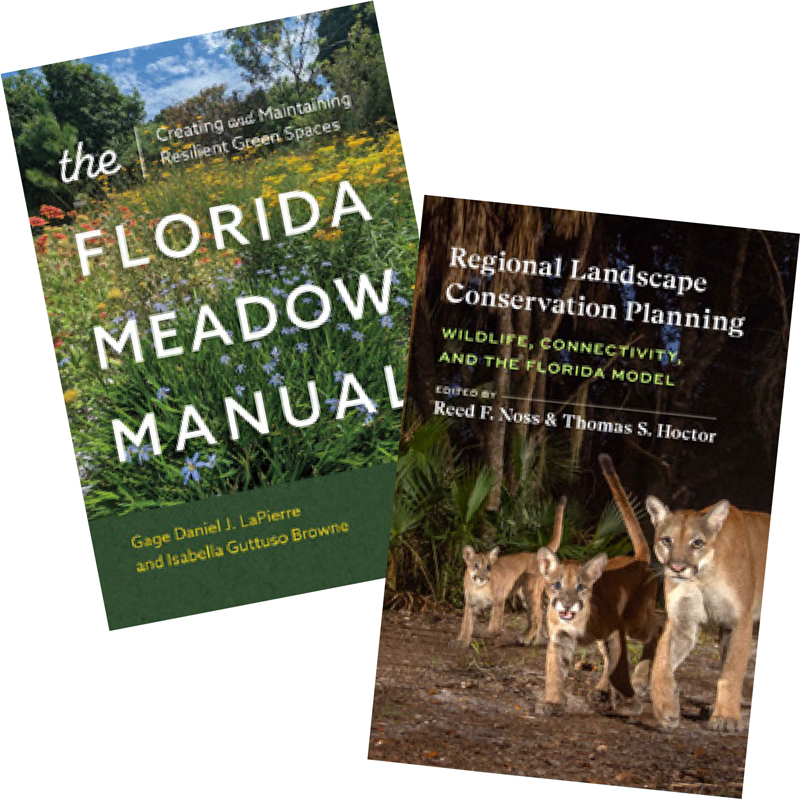
Regional Landscape Conservation Planning: Wildlife, Connectivity, and the Florida Model (April 2026), highlights Florida’s leadership in science-based regional conservation.
And the Center celebrates the release of The Florida Meadow Manual (March 2026), translating native plant research into practical guidance for designing and maintaining meadow landscapes that support pollinators and biodiversity.